
Healthcare and care settings
Plan around meal schedules, ware types, restricted access, infection-control procedures, and facility review. No clinical or code-compliance outcome is implied.
Operating contexts
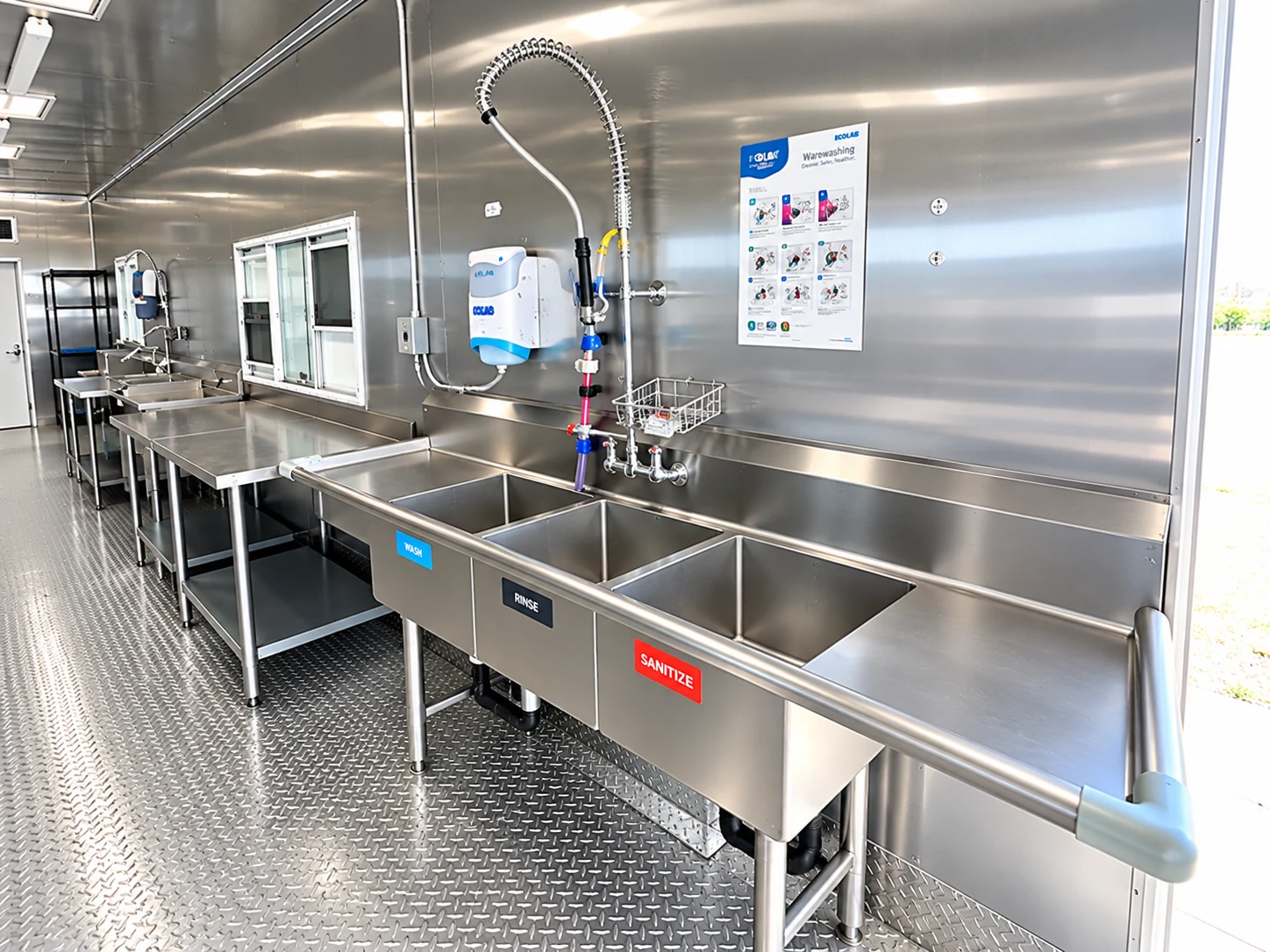
Temporary warewashing planning starts with service windows, access, ware types, utilities and the approval path for the real facility.
Plan around meal schedules, ware types, restricted access, infection-control procedures, and facility review. No clinical or code-compliance outcome is implied.
Document peak meal windows, return flow, staging space, staffing, and connections before evaluating a temporary configuration.
Include controlled access, movement restrictions, supervision, delivery windows, and site-specific approval in early planning.
Define procurement requirements, site authority, operating duration, access, utilities, and wastewater responsibilities before discussing equipment.
Estimate peak covers, serviceware mix, soil handling, clean storage, staff movement, and how the temporary unit connects to the existing operation.