
Wisconsin location guide
Wisconsin Commercial Dishwashing Facility Rental
Prepare a Wisconsin temporary warewashing project for winter access, freeze protection, wastewater handling and scheduled meal-service continuity.
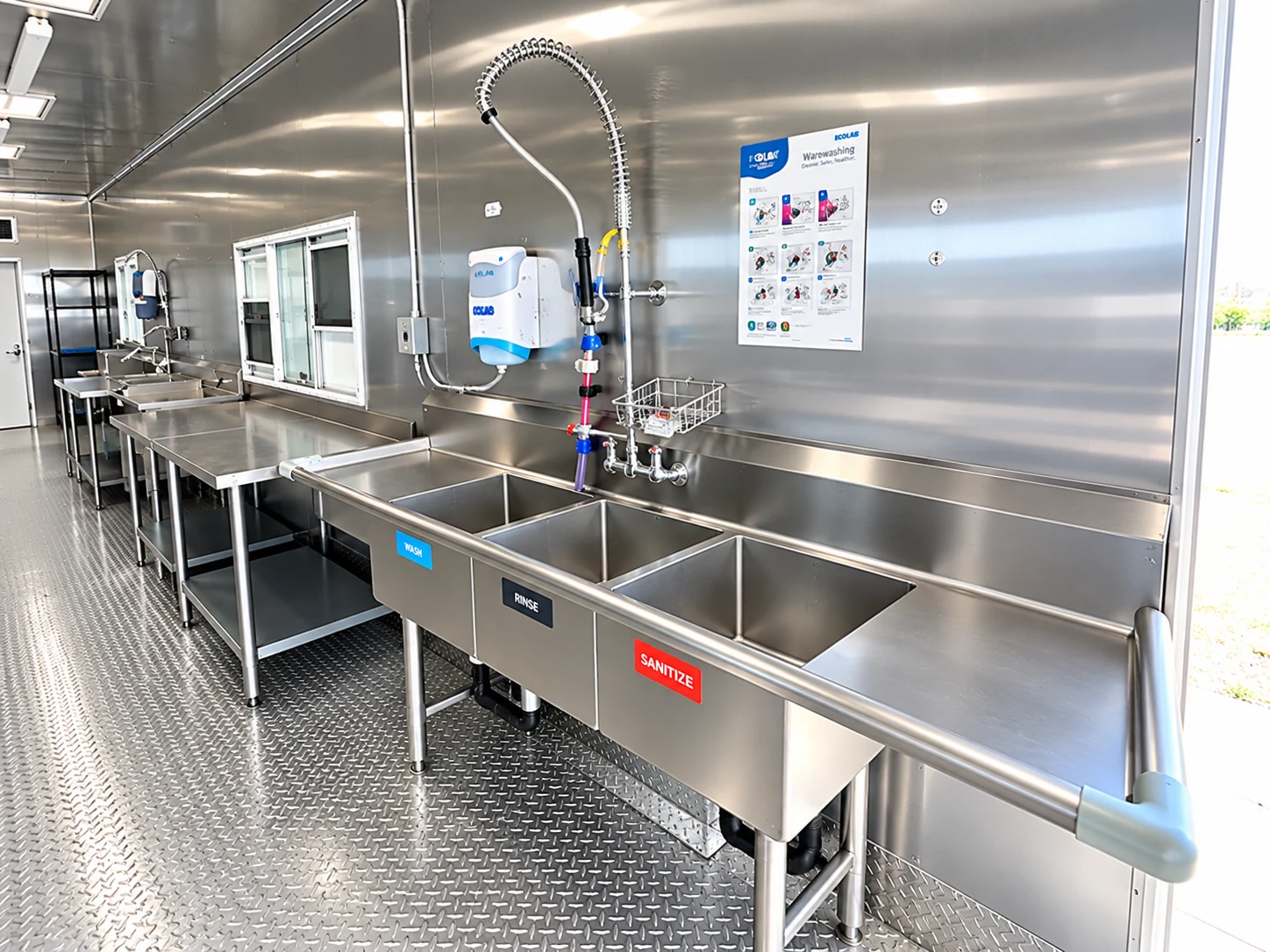
Plan for Wisconsin operating conditions.
Snow routes, freezing temperatures and seasonal site conditions should be reflected in delivery access, exterior utility protection and service planning.
Build the city and site brief.
The city selector includes Census place data for communities such as Milwaukee, Madison, Green Bay, Kenosha, Racine and Appleton. Add the street address, placement area, delivery route, operating dates and responsible site contact.
Document the delivery and setup route.
Identify the plowed delivery route, turning space, overhead clearance and a stable setup surface. Keep snow storage, routine deliveries, fire access and staff movement clear of the proposed trailer and its utility connections.
Share current photographs and measured clearances instead of relying on a city name or map pin. The final placement still requires a project-specific transport, equipment and site review.
Confirm utilities and wastewater.
Power, potable water, pressure, hot-water strategy, grease management and wastewater routing must be matched to the selected configuration and approved locally.
Assign approvals and operating responsibilities.
Identify the property contact and the qualified parties responsible for electrical service, potable-water protection, plumbing, wastewater, grease management, fire access, environmental controls and any required local approvals. This page is a planning guide; it does not replace site engineering or authority review.
Prepare a weather and continuity fallback.
Assign responsibility for snow clearance, freeze protection and inspection of exterior lines. Include a response for overnight freezing, a delayed pump-out or delivery vehicle, and any interruption to normal meal-service timing.
Record how ware will be handled if the temporary operation cannot run as planned, who communicates the change and what conditions trigger that decision.
Match a documented equipment family.
Compare the 22, 24 and 26 ft low-temperature configurations with the 38 ft high-temperature conveyor configuration, then request a review of the exact site, rental period and warewashing workflow.